Need a solution?
Please call us now on
+44 (0)1384 563356
Email your enquiry to
sales@brooksforgings.co.uk
We have a diverse range of thermal technologies for precision grain structure control and operational efficiency.
Precise temperature management is the foundational element of metal forming.
It determines material ductility, flow stress, and the final mechanical properties of the component. Selecting the optimal heating method is a critical engineering decision, governed by the material grade, the required production volume, and the specific deformation process.
By maintaining a comprehensive portfolio of heating technologies, manufacturing operations can ensure consistent quality while optimising for energy efficiency and supply chain resilience.
Electrical Induction Heating
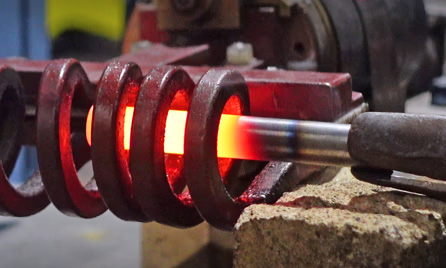
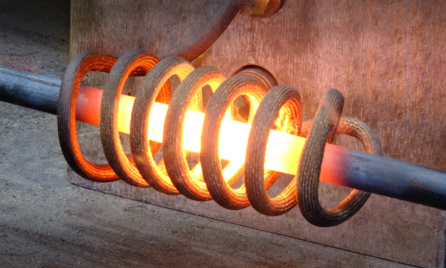
Induction heating is the process of utilising a material's ability to conduct electricity through electromagnetic induction. Heat is rapidly generated from the inside out by eddy currents.
As there is no external contact with the heating method, as found with oil or gas-fed furnaces, induction heating is prefered if material contamination is an issue.
Bar End Induction Heating
Typically used during an upset forging process where only the end of the bar is heated and formed.
Mid-point Induction Heating
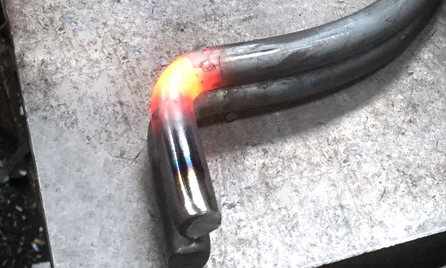
Material can be passed fully through the coil to heat a midpoint. By using a bespoke coil box it is also possible to heat the material in multiple locations simultaneously along its length. This is often used for the production of components requiring multiple bends such as square back u-bolts or bespoke bracketry.
Continuous Automated Induction Heating
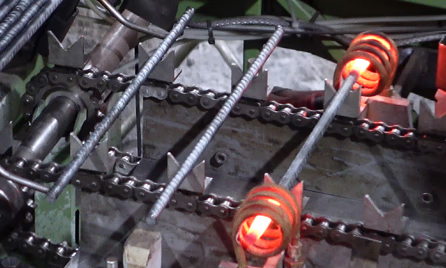
Commonly used during drop forging and robotic automated processes, the pre-cut raw material is loaded into a hopper feed and is passed through multiple coil boxes via a fully automated conveyor system to fully heat the workpiece. This is optimised to supply a constant flow of ready-to-form material to the operator.
Electrical Resistance Heating
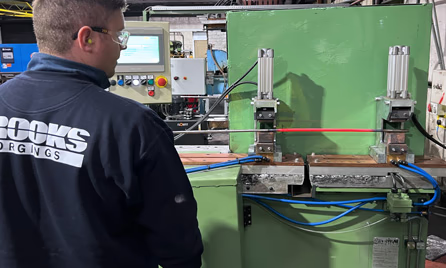
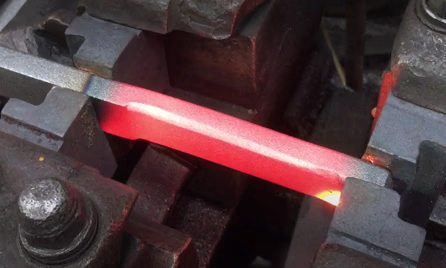
Resistance heating is a process that uses an alternating electrical current passed between two clamped points on a conductive material. The resistance to electrical flow generates heat. This method is used either when heating of a very small area is required or a much longer span where the cost of a custom induction coil or traditional furnace is prohibitive.
Electrical Oven Furnaces
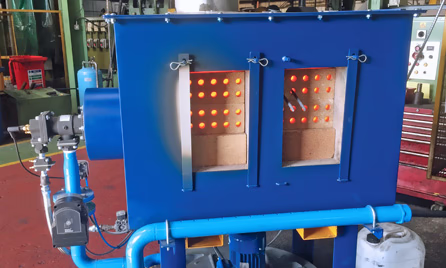
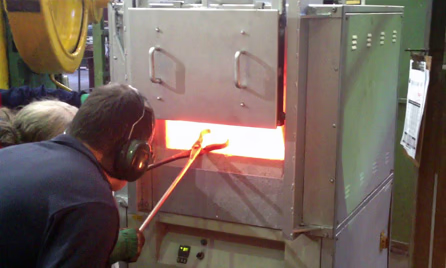
The use of electric ovens is often reserved for exotic materials requiring a more controlled and prolonged soak time to ensure that they are correctly heated before forming.
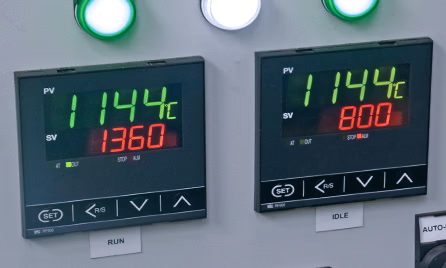
Much like a conventional oven, electrical heating elements surround a specially lined and sealed chamber in which the temperature can be digitally controlled.
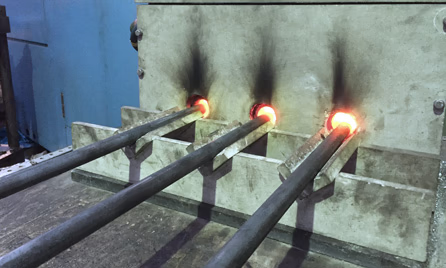
Smaller 'open' electric ovens remain energy efficient and can be used to heat multiple bar ends, typically for upset forging processes, when required.
Oil & Gas Furnaces
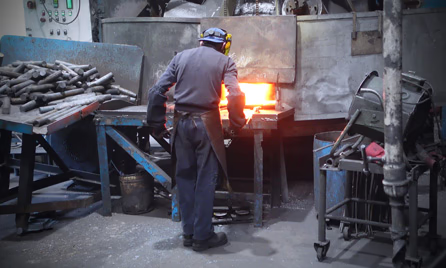
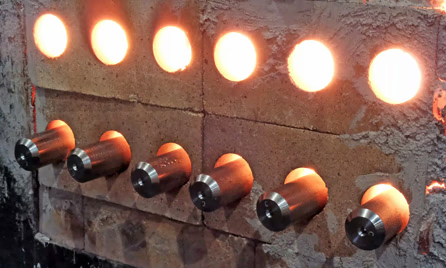
The most common method of heating raw materials is by using an oil or gas-fed furnace. A static ‘box’ or ‘envelope’ brick furnace is commonplace alongside larger rotary furnaces that are more energy efficient with larger heating capacity. As a way to reduce carbon footprint and cost, we have several custom-built double-sided brick furnaces that utilise the same amount of fuel as a single-sided furnace but can supply heated material to two operational workstations at a time. Bespoke furnaces can also be built to accommodate much larger workpieces when required.