


15/09/2020
Heritage Replication for National Lottery Funded Jewellery Quarter Cemeteries Project
Read more
Need a solution?
Please call us now on
+44 (0)1384 563356
Email your enquiry to
sales@brooksforgings.co.uk
We specialise in the faithful reproduction of decorative heritage ironwork, combining traditional craftsmanship with modern digital design to restore lost or damaged architectural components.
We bridge the gap between historical preservation and modern engineering solutions.
By integrating original physical samples, historical photographs, and advanced digital design software, we create bespoke tooling that allows us to reproduce ironwork faithful to the original design. Whether for major heritage restoration projects or new developments requiring authentic period aesthetics, our team ensures every component meets the visual and structural requirements of your project.
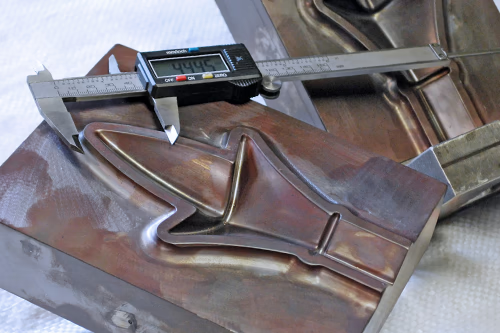
Our in-house tool room is the cornerstone of our replication capability.
By maintaining full control over the tooling process, we can transform any reference, be it a legacy drawing, a worn-down physical sample, or a historical photograph, into precision-engineered tooling.
This capability allows us to recreate complex geometries that are often no longer commercially available, ensuring your restoration project remains authentic.
By digitising physical samples through 3D CAD modeling, we can refine the geometry to correct years of wear and tear, ensuring the finished component not only replicates the original aesthetic but also improves upon the fit and finish for modern installation requirements.
We provide two distinct pathways for heritage replication.
The selected process is dependant on what best suits the budget, volume, material, and structural requirements of your project:
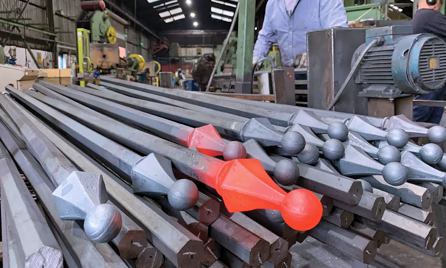
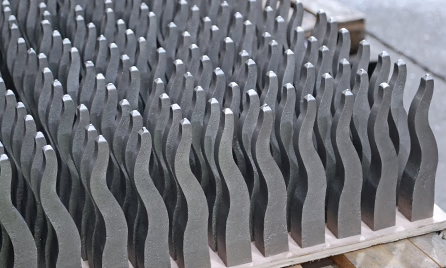
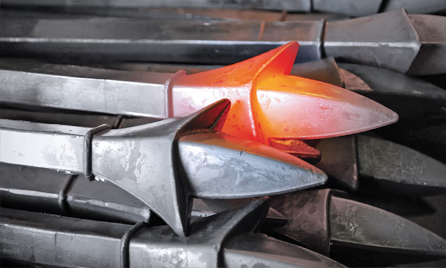
Forging is our preferred method for medium-to-high volume replication. By using bespoke forging dies, we manipulate raw steel into precise, consistent forms. This process is ideal for creating "clean" components that require no additional fettling and offer superior strength. Notably, we can forge decorative elements like railheads directly onto the bar stock, creating a high-strength, one-piece component with improved durability.
Casting is ideally suited for low-volume projects where specific surface textures or complex decorative details must be preserved. We create moulds from physical samples, capturing a mirror impression of the original. While cast iron components may require secondary finishing (fettling) to ensure a smooth surface, this process provides the highest level of detail for intricate architectural embellishments.
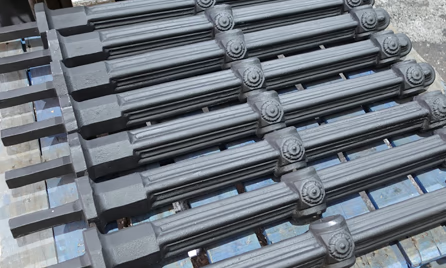
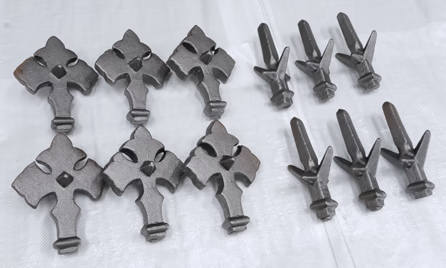
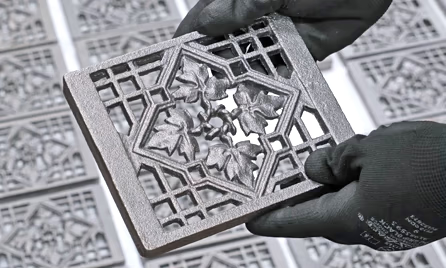
Our commitment to heritage restoration goes beyond manufacturing; it is a dedication to preserving historical integrity through precise engineering.
We work closely with conservationists, architects, and estate managers to reproduce obsolete or damaged components, ensuring that every replacement remains faithful to the original design.
By seamlessly blending traditional blacksmithing techniques with advanced modern tooling, we provide durable, accurate solutions that protect the character of historical landmarks while meeting today's rigorous structural standards.
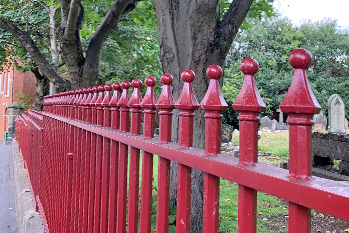
Local heritage railhead design hot forged directly to hexagonal bar stock, matching forged underbar embellishment.
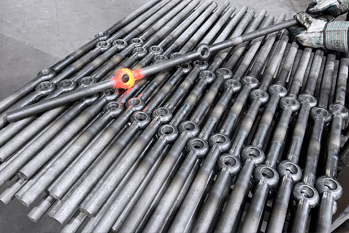
New forged handrail components.
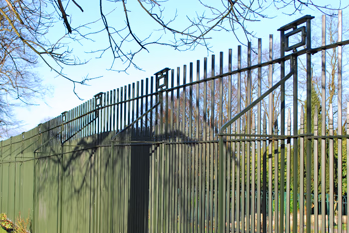
Forged steel pickets, fence post scrollwork, gate hinges, and components. Replicated style from one remaining on-site fence panel.
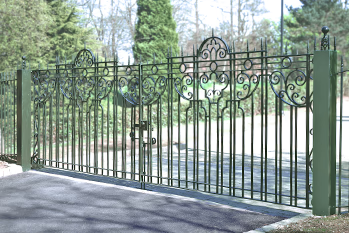
Forged components in art deco style and Brooks Hollow Rail fencing system.
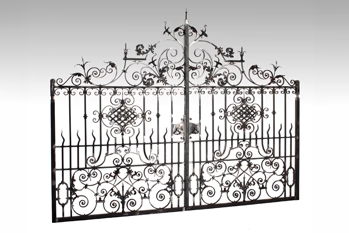
Highly decorative forged gate.
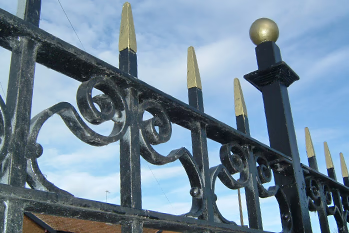
Forged steel pickets and hot forged scrolls.
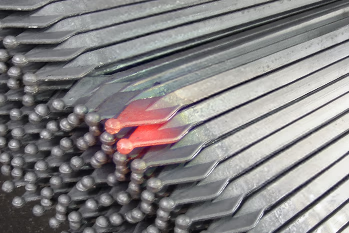
Forged railing pickets and bespoke punched rails.
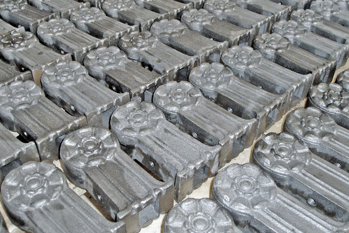
Special cast iron 'Tulip" fencing embellishment.
15/09/2020
Heritage Replication for National Lottery Funded Jewellery Quarter Cemeteries Project
Read more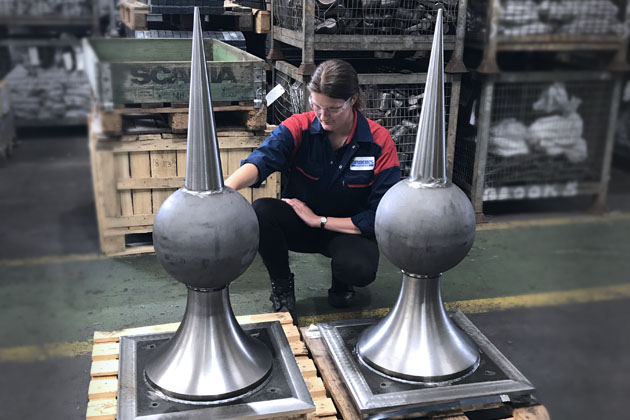
22/08/2018
Large Fabricated Post Tops for New Footbridge Project
Read more
30/09/2015
Balustrade Production For £175M London Garden Bridge Project
Read more
04/02/2009
Emblem Replication Project for Decorative Application
Read more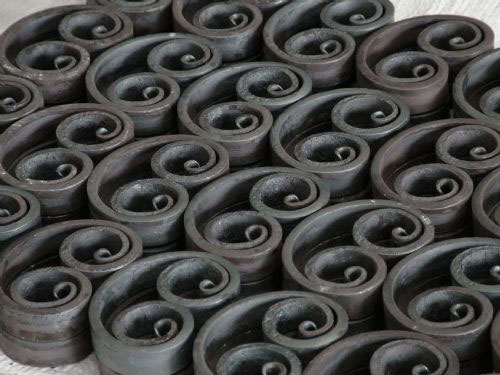
16/10/2009
Brooks Maintain Traditional Ironwork Style
Read more
22/04/2010
Local Historic Park Gets a New Lease of Life
Read more




