
Need a solution?
Please call us now on
+44 (0)1384 563356
Email your enquiry to
sales@brooksforgings.co.uk
We provide high-precision swaging and pointing services, transforming raw bar and tube ends into specialised profiles, tapers, and points for a diverse range of industrial applications.
By utilising dedicated rotary swaging technology, we deliver consistent, dimensionally accurate end-forming that optimises material properties and surface finish, far exceeding the quality of basic grinding or turning.
Swaging is a chipless manufacturing process that offers significant structural advantages. By displacing (rather than removing) metal, our swaging operations improve the grain flow of the material, resulting in increased tensile strength and fatigue resistance in the finished component. Our pointing services are engineered to provide precise tapers, ideal for anchor bolts, tensioning rods, and specialised fastener assemblies.
The Swaging Process

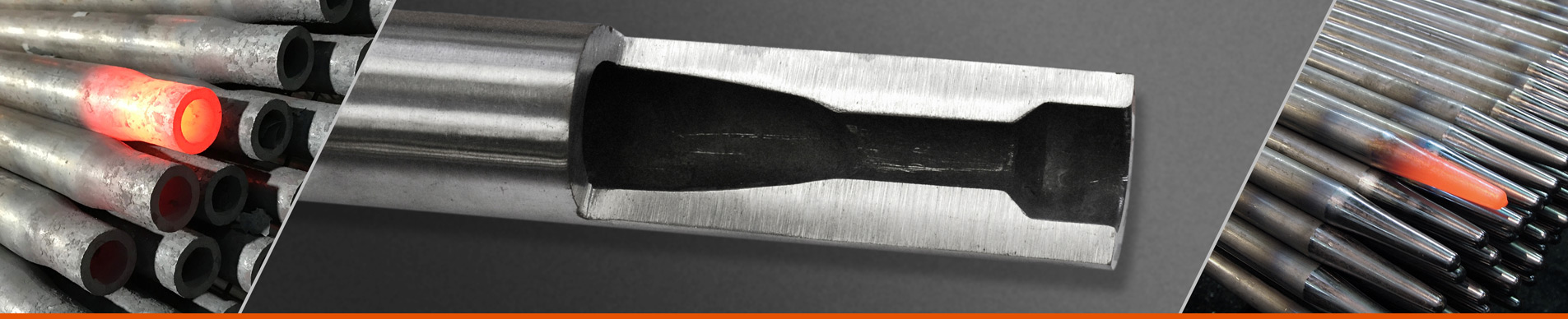
Swaging is a precision metal-forming process used to reduce the diameter, create tapers, or form complex points on solid and tubular materials. Whether performed cold or through induction heating, the process is designed to reshape metal while maintaining, and often enhancing, its structural integrity.
Rotary Swaging & Radial Forging
Our rotary-based swaging machines utilise a two or four-die system to hammer round workpieces into specific diameters at speeds of up to 2,000 cycles per minute. By displacing rather than removing material, we achieve a superior surface finish and improved grain flow, providing a significant performance advantage over machined or ground alternatives.
Bespoke Forming Methods
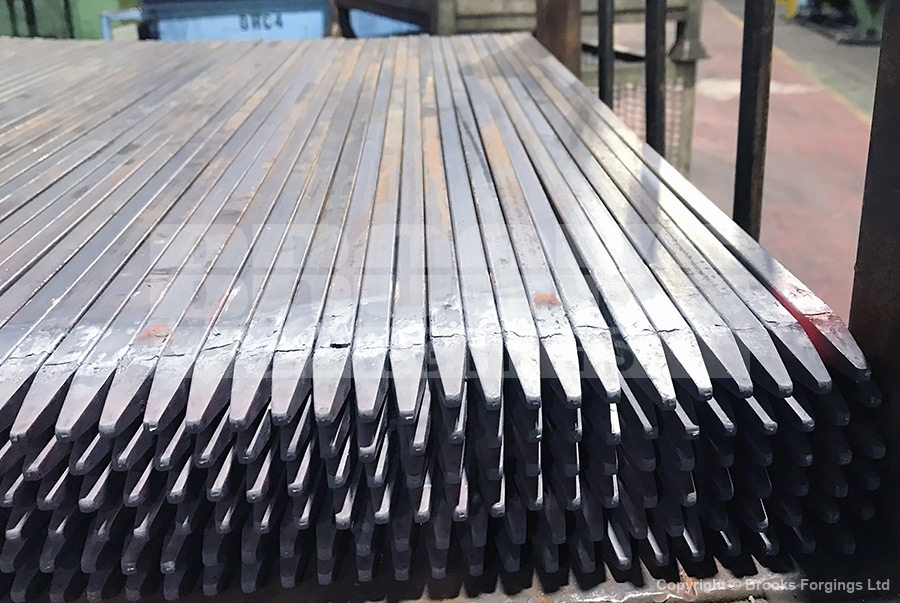
Beyond standard rotary swaging, we utilise proprietary in-house forming techniques to solve complex geometry challenges where conventional methods are unsuitable. This includes specialised operations such as reducing solid flats to create precise round bar sections at a single end, allowing us to produce custom profiles that meet the most demanding engineering requirements.