
Need a solution?
Please call us now on
+44 (0)1384 563356
Email your enquiry to
sales@brooksforgings.co.uk
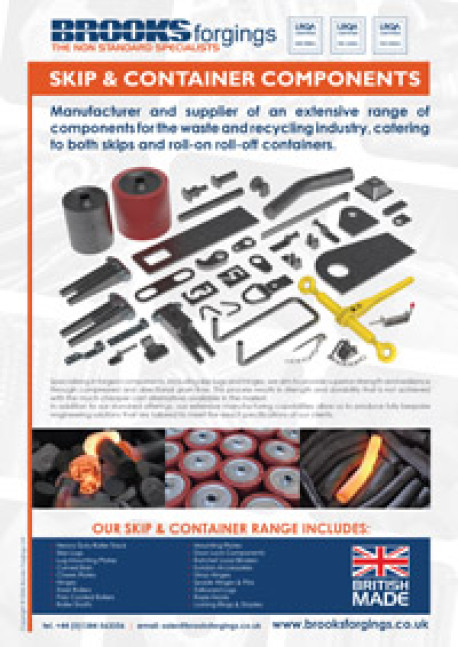
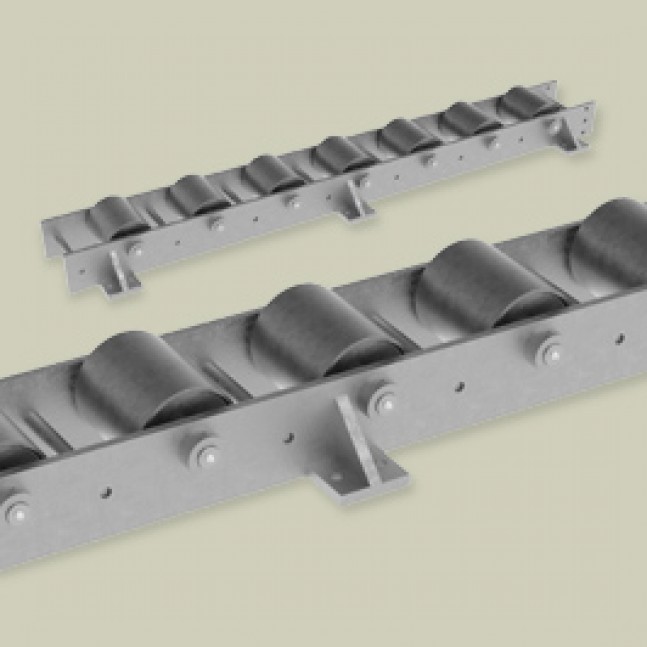
Industry specified, high-strength forged, fabricated, and machined components, parts, and spares engineered specifically for the skip and container manufacturing and refurbishment industry.
Offering comprehensive UK manufacturing capabilities for standard commercial patterns and bespoke heavy-duty waste management hardware.
We specialise in the precision manufacture of robust skip and container spares designed to withstand the severe impact, heavy loads, and constant wear associated with the waste and recycling sector. By utilising forging processes that deliver a compressed, directional grain flow around critical stress points, surpassing cheaper cast alternatives, we ensure maximum structural longevity and safety across new builds and container maintenance projects.


Engineering Integrity: Forging vs Profiling vs Casting
Optimised grain structure for maximum structural resistance.
Many standard components supplied into the waste and recycling industry are either cast or cut directly from plain steel plate. Cutting profiles from flat stock severs the natural grain flow across contour changes, exposing grain ends that make the material vulnerable to fatigue, stress corrosion, and premature failure under heavy dynamic loads.

Forged Bar: Optimal Grain Alignment
Through precision forging, the internal grain structure is deliberately oriented to follow the component's contours. This engineered alignment provides maximum strength, superior ductility, and exceptional resistance to impact and fatigue.

Profiled Plate: Severed Grain Structure
The cutting process forcibly breaks the grain flow when changing contours, exposing "grain ends". This discontinuity creates structural vulnerabilities, rendering the component more susceptible to fatigue and stress-corrosion cracking.

Casting: Absence of Grain Flow
The casting process involves cooling molten metal, which results in a random internal structure. Because there is no directional grain alignment, the material lacks the structural integrity and consistent performance associated with forged components.
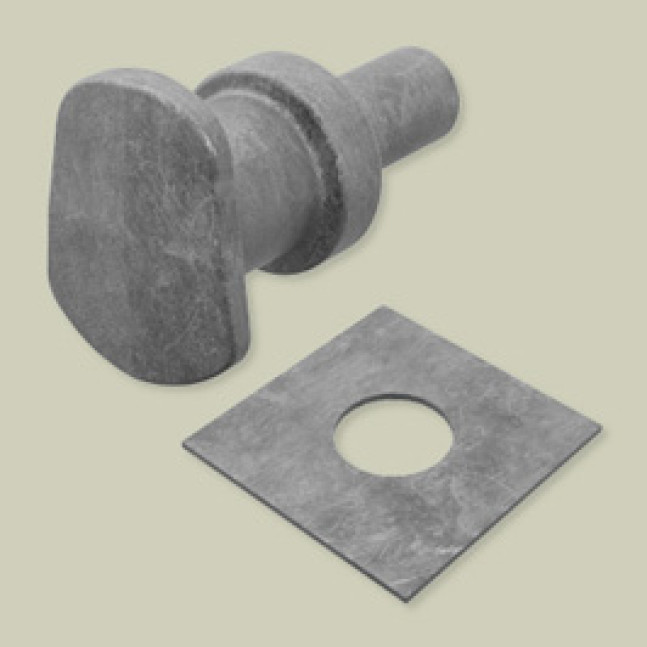
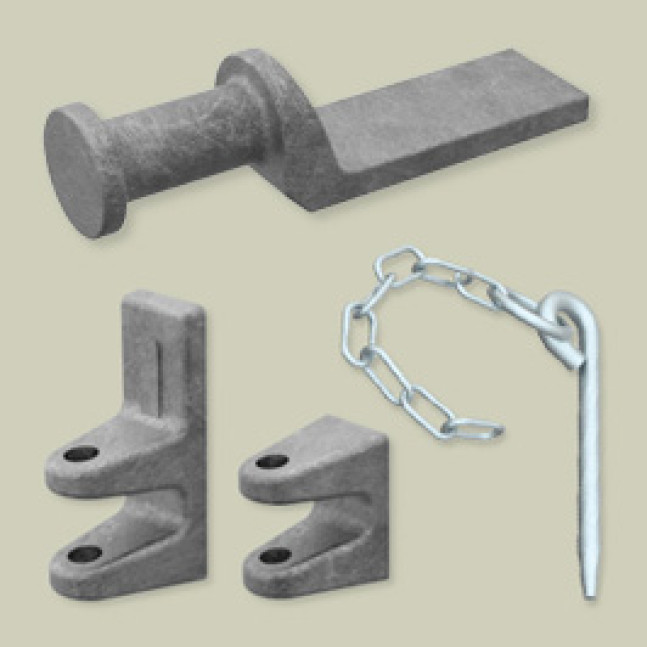
Our forged components, such as skip lugs and heavy-duty hinges, feature a compressed, directional grain flow that naturally contours around structural eyelets and stress boundaries. This delivers exceptional resilience and impact resistance that cheaper cast or profile-cut alternatives simply cannot match.
In-House Design & Manufacturing Capability
Advanced technical support from simulation to finished hardware.
To ensure absolute structural safety and performance under strenuous field conditions, our production facility combines advanced manufacturing with rigorous in-house technical evaluation:

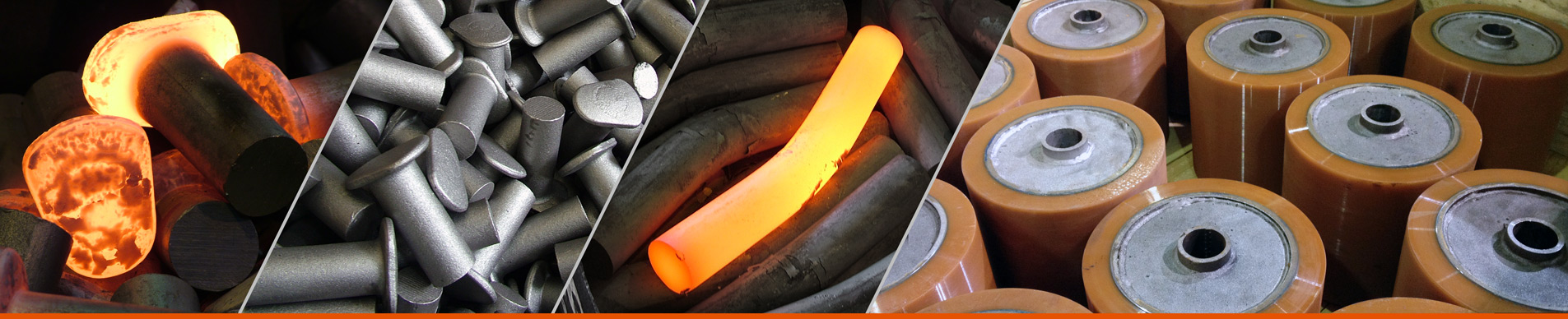
Hot Forging
State-of-the-art hot forging cells shape components to precise geometric tolerances, optimising material strength and structural integrity for heavy industrial applications.

Hot Bending
Advanced heavy bending capabilities shape components such as curved bars and custom profiles to exact layouts, ensuring correct alignment and geometry.

Fabrication
Comprehensive in-house fabrication and welding capabilities deliver finished sub-assemblies and structural components ready for immediate site installation or refurbishment.

3D Stress Analysis
Using advanced software to perform static and assembly stress simulations on rendered 3D models, we evaluate product structure and design suitability before production begins.